
VAST EXPERIENCE ACHIEVING SATISFACTION OF GLOBAL CUSTOMER

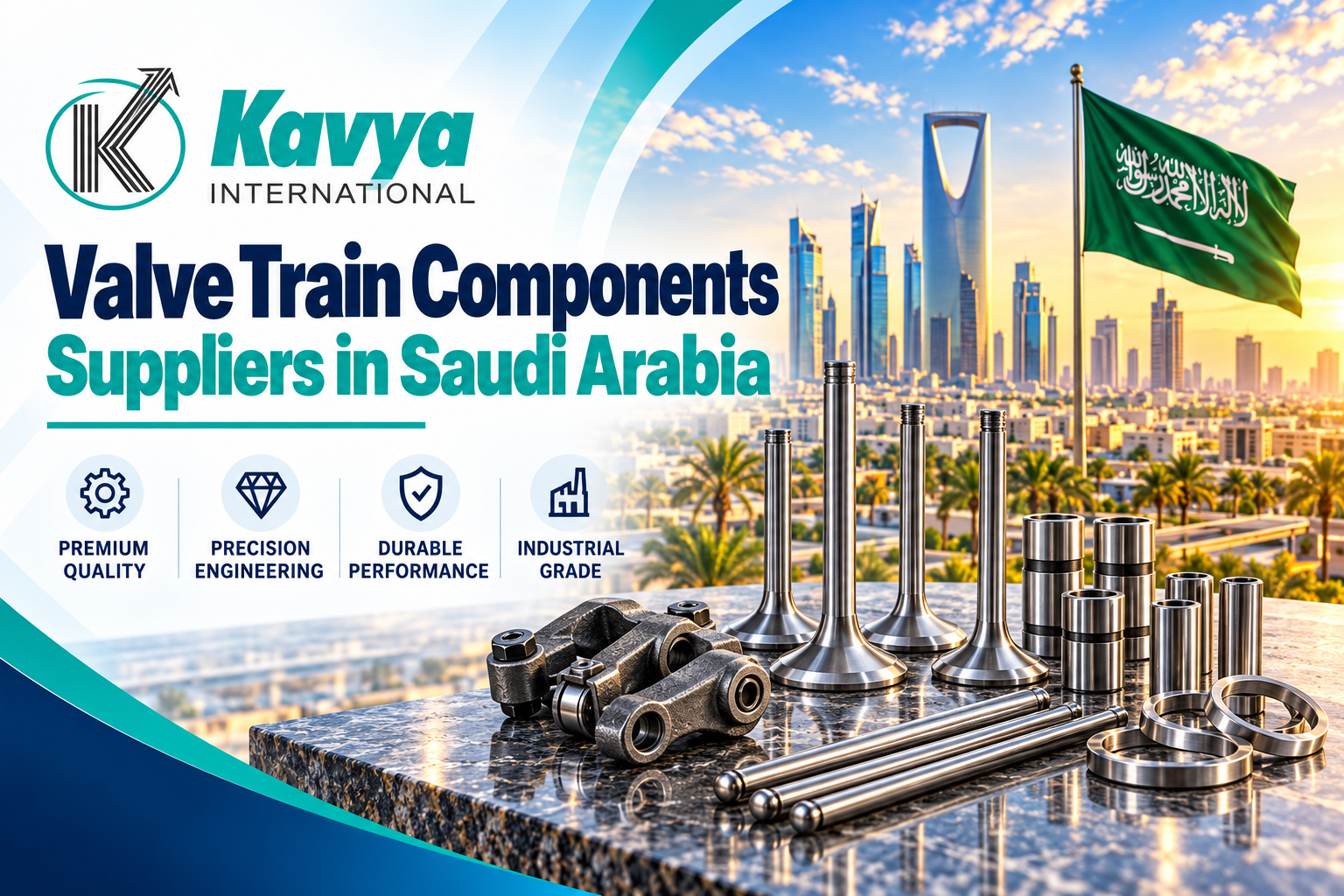
Valve Train Components Suppliers in Saudi Arabia
Table of Contents
- What Valve Train Components Do in an Engine
- Main Valve Train Parts and Material Considerations
- Dimensions and Specifications Buyers Should Share
- Practical Fitment Checklist Before Ordering
- Inspection, Packaging and Saudi Import Checks
- Applications in Vehicle and Industrial Engines
- Mistakes That Lead to Wrong Valve Train Parts
- How to Enquire With Kavya International
- Conclusion
- Frequently Asked Questions
What Valve Train Components Do in an Engine
Valve train components coordinate the opening and closing of intake and exhaust valves in an internal combustion engine. Depending on the design, the system uses a camshaft and associated parts to transmit movement to each valve, while springs help return the valves to their seated position. Buyers researching Valve Train Components Suppliers in Saudi Arabia should start with the engine configuration, not a product photograph.
Quick answer: what matters most when sourcing a replacement?
Correct fitment comes first. An engine model, OE reference, verified dimensions and valve train layout are usually more useful than a broad description such as “diesel engine valve.” A small difference in a stem, groove or contact surface can change how a part fits.
- Intake and exhaust valves control gas flow through the cylinder head.
- Valve guides support valve-stem movement; valve seats provide the sealing contact.
- Valve springs, retainers and keepers manage valve return and retention.
- Tappets or lifters, cam followers, pushrods and rocker arms transfer motion where the design uses them.
Not every engine has pushrods or rocker shafts. An overhead-cam arrangement can be quite different from a pushrod-type overhead-valve engine, so the bill of parts must follow the actual engine.
Main Valve Train Parts and Material Considerations
Valves, guides and seats
Intake and exhaust valves may need different heat and corrosion resistance. Valve guides are commonly made from selected iron-based or copper-alloy materials, while seat inserts are chosen for wear resistance and the engine's thermal duty. Do not treat these as interchangeable grades. The engine maker's drawing or approved reference controls the choice.
Tappets, rocker arms and valve springs
Tappets and rocker-contact surfaces have repeated sliding or rolling contact, so surface condition, hardness and lubrication matter. Rocker arms and shafts need the correct geometry and oil passages. For valve springs, free length alone is not enough: installed height and the specified spring load at defined heights matter where the technical data calls for them.
Practical buyer note: ask which component is actually worn. Replacing only a valve while ignoring a damaged guide or seat may leave the original fitment issue unresolved. The repair decision should follow inspection by a qualified engine technician.
Dimensions and Specifications Buyers Should Share
A useful RFQ identifies the engine manufacturer, engine code, vehicle or machine application, OE or cross-reference number, requested quantity and photographs of existing markings. For a drawing-led enquiry, share the controlled drawing revision and measurement units.
- Engine valves: overall length, head diameter, stem diameter, seat-face angle and tip or keeper-groove geometry.
- Valve guides: outside diameter, bore diameter, length, installation method and specified stem-to-guide clearance.
- Valve seats: outside and inside diameters, thickness, seat profile and approved interference-fit requirement.
- Tappets and rocker parts: contact geometry, mating dimensions, oil-hole position and specified finish or hardness.
- Valve springs: dimensions, installed height, load at specified heights and any approved material or treatment requirement.
There is no sensible universal clearance, hardness or spring pressure for all engines. Use the OEM service data, approved drawing or measured and verified sample. An estimate copied from a different engine family is not a specification.
Practical Fitment Checklist Before Ordering
Before approving a valve train quotation, confirm whether the component is for an intake or exhaust position, and check the exact engine variant. Compare the complete OE reference, dimensions, mating components and any repair-size designation. If the job involves a cylinder-head rebuild, confirm whether the seats and guides have already been machined or replaced.
Quick answer: is matching the outside appearance enough?
No. Two valves can look identical in a photo but have different stem lengths, groove shapes or seat angles. Ask for the actual measurements and part reference before approving a substitute.
Inspection, Packaging and Saudi Import Checks
Useful checks include part marking, dimensions, visible damage, surface finish and the condition of sealing or contact faces. When the order specifies a particular material, hardness, coating or heat treatment, agree on the required evidence before production or dispatch. The acceptance standard should be tied to the approved drawing or part specification, not a vague “export quality” label.
Protect precision-machined faces, valve stems and guide bores against impact, contamination and moisture in transit. Saudi Arabia importers should also check HS classification, invoice and packing information, country of origin and any conformity procedure applicable to the exact product. Saudi Standards, Metrology and Quality Organization (SASO) rules can apply to vehicle spare parts; requirements may differ for stationary industrial-engine components. Verify the current route with the Saudi importer before shipment.
Applications in Vehicle and Industrial Engines
Valve train components are found in passenger and commercial vehicles, diesel trucks, buses, agricultural equipment, construction machinery, generator engines, marine engines and stationary industrial power units. Duty, engine speed, operating temperature and maintenance history vary widely. A continuous-duty genset and a road vehicle should not automatically be treated as the same parts application, even if their valves have similar dimensions.
Mistakes That Lead to Wrong Valve Train Parts
Frequent mistakes include confusing an intake valve with an exhaust valve, ordering against an incomplete engine code, ignoring keeper-groove geometry, assuming all valve guides use the same bore clearance, and checking spring free length without the applicable load data. Another is focusing on the lowest quoted price while leaving identification, inspection criteria and packaging undefined.
One useful habit is to attach a photo of the part marking and a measurement sheet. A photograph tells a supplier what the part resembles; measured dimensions help establish whether it can actually be matched.
How to Enquire With Kavya International
Buyers looking for Valve Train Components Suppliers in Saudi Arabia can send Kavya International their engine details, component reference, drawing or sample information, quantity and destination for an enquiry. This makes it possible to discuss the requested part on technical terms, rather than assume availability or interchangeability. Material, dimensions, inspection evidence, packing and commercial terms should be confirmed for each enquiry.
Suggested technical-team note for Kavya International to approve: “For valve train parts, the engine code and mating dimensions matter more than a photo that looks close. Please send the reference and measurements together.”
Need valve train components for a Saudi Arabia order? Share your engine model or code, OE reference, part name, quantity, drawings or clear measured photos with Kavya International. Include the destination and any required inspection documents so the enquiry can be reviewed accurately.
Request a QuoteFrequently Asked Questions
Which parts are included in an engine valve train?
A valve train may include intake and exhaust valves, valve springs, retainers, keepers, guides, seats, camshafts, tappets or lifters, pushrods, rocker arms and related shafts. The exact parts depend on the engine design.
What details are needed to request a valve train components quotation?
Share the engine make and model, engine code, OE or part number, requested component, quantity and clear photographs. Include drawings, critical dimensions, materials, valve head and stem dimensions or spring specifications when relevant.
Can similar-looking engine valves be used interchangeably?
No. Check the OE reference, overall length, head diameter, stem diameter, seat angle, groove profile, material and engine application. A visually similar valve can still be incompatible.
Which materials are commonly used for valve train components?
Depending on the design, engine valves may use heat-resistant steels or alloys, guides may use iron-based or copper-alloy materials, and tappets and rocker components may use engineered or heat-treated steels. Specify the approved grade rather than assuming a substitute.
How do I check a valve guide and valve stem fit?
Check guide bore, valve stem diameter, specified running clearance, guide outside diameter and installed condition against the engine maker’s specifications. Do not use an assumed universal clearance.
What inspection checks matter for valve train parts?
Confirm part identification, critical dimensions, seating and contact surfaces, surface finish, visible defects and any drawing-specified hardness, coating or heat-treatment requirements. Request inspection evidence appropriate to the order.
What common errors happen when ordering valve train components?
Common errors include matching by photograph alone, confusing intake and exhaust valves, missing engine-code variants, overlooking groove or seat geometry, and requesting a standard-size part when the repair needs another specification.
What should buyers verify for imports into Saudi Arabia?
Confirm HS classification, invoice and packing details, origin information and whether the specific automotive spare part falls under applicable SASO requirements. Check the current conformity and shipment documentation route with the importer before dispatch.
People Also Searched For
Valve train components Saudi Arabia, engine valve suppliers, intake and exhaust valves, valve guides and valve seats, valve tappets and lifters, rocker arms and shafts, valve springs, cam followers, diesel engine cylinder-head parts, Kavya International.
Conclusion
The sensible way to compare Valve Train Components Suppliers in Saudi Arabia is to ask whether the part matches the real engine and repair requirement. Confirm the engine reference, critical dimensions, material, mating geometry and inspection criteria before discussing final dispatch details. For a specific engine valve, guide, seat, tappet or rocker requirement, contact Kavya International with your technical information and request a quotation based on that exact need.


