
VAST EXPERIENCE ACHIEVING SATISFACTION OF GLOBAL CUSTOMER

Valve Seats Suppliers in UAE | Kavya International
If you are comparing Valve Seats Suppliers in UAE, start with fit, material compatibility and operating conditions rather than price alone. Kavya International supports buyers looking for precision engine components and replacement valve seats for engine rebuilding, industrial maintenance and aftermarket requirements. A valve seat may look like a simple ring, but its dimensions, hardness, contact geometry and installation fit directly affect sealing, heat transfer and valve life.
Table of Contents
- What Is a Valve Seat and What Does It Do?
- Valve Seat Materials and Selection Factors
- Dimensions, Fit and Machining Details
- Applications Across UAE Industries
- Buyer Checklist Before Ordering
- Common Valve Seat Buying and Installation Mistakes
- Sticky Q&A: Quick Answers for Buyers
- Sourcing Valve Seats from Kavya International
- Frequently Asked Questions
- Conclusion
What Is a Valve Seat and What Does It Do?
A valve seat is the surface or replaceable insert against which a valve closes. In an internal-combustion engine, the seat helps create the seal around the intake or exhaust valve and also provides a path for heat to move away from the valve head into the cylinder head. Similar seating functions are important in selected industrial valve and mechanical applications where repeated contact, wear and sealing matter.
Short answer: the correct valve seat should match the application, valve geometry, operating temperature and required interference or fit. Choosing only by outside diameter is not enough.
- Supports repeatable sealing between the valve and seat contact area.
- Helps transfer heat away from the valve during operation.
- Resists wear, impact and repeated opening-and-closing cycles.
- Maintains the required valve position when machined and installed correctly.
Valve Seat Materials and Selection Factors
Valve seat material should be selected around the real duty cycle. Depending on the engine or equipment design, buyers may encounter alloyed cast-iron grades, hardened ferrous materials, powder-metal or sintered grades, and other heat- or wear-resistant materials. The exact choice depends on the valve material, temperature, fuel or process media, contact pressure, cooling and expected service life.
For example, an exhaust valve seat normally sees a different thermal load than an intake seat. A seat for a high-duty diesel engine may also need different wear and heat characteristics than a seat used in a light-duty application. This is why responsible Valve Seats Suppliers in UAE should ask for application details instead of assuming one material suits every engine.
Dimensions, Fit and Machining Details
The most useful enquiry is not just “send a valve seat.” It includes the outside diameter, inside diameter, overall height, seat angle or profile, dimensional tolerances, required interference, and where possible a drawing, old sample or part reference. Final seat geometry is often finished after installation, so correct machining practice is just as important as the supplied component.
- Outside diameter: affects the interference or retention in the head or housing.
- Inside diameter: must suit the valve and throat geometry.
- Height: affects installed position and available machining allowance.
- Seat angle/contact profile: must match the valve and service requirement.
- Concentricity: matters because an off-centre seat can cause poor sealing and uneven valve contact.
Applications Across UAE Industries
UAE buyers may require valve seats for repair, rebuilding or replacement work across automotive, diesel, marine, power-generation and industrial maintenance environments. Typical applications can include:
- Automotive & Commercial Vehicles: cylinder-head rebuilding for cars, buses and trucks.
- Diesel Engines: replacement valve seat inserts used during engine overhaul and repair.
- Marine & Generator Engines: maintenance of engines operating for long duty cycles.
- Construction & Heavy Equipment: engine repair for loaders, excavators and other machinery.
- Industrial Maintenance: replacement components where drawing-based dimensions and material compatibility are required.
Buyer Checklist Before Ordering Valve Seats
A little preparation before sending an enquiry saves a lot of back-and-forth later. For a more accurate quotation, share as much of the following as you have:
- Outside diameter, inside diameter and height.
- Seat angle, radius or profile details where applicable.
- Material requirement or existing material reference.
- Engine model, equipment model or application.
- Intake or exhaust position, if relevant.
- Drawing, sample dimensions, old part or clear photographs.
- Required quantity and delivery destination in the UAE.
Practical point: if the old seat has already failed, do not copy only its worn dimensions. Check the bore and original fit requirement first, because the removed part may no longer represent the correct installed size.
Common Valve Seat Buying and Installation Mistakes
Many valve-seat problems begin before the engine is assembled. Some of the most common mistakes are simple and avoidable:
- Ordering by outside diameter only and ignoring height, ID or profile.
- Selecting a material without considering exhaust temperature or fuel/media conditions.
- Using an interference fit that is too loose or too aggressive for the head material.
- Machining the seat before confirming concentricity with the valve guide.
- Ignoring valve-face condition while replacing only the seat.
- Assuming every intake and exhaust seat should use the same material or geometry.
Sticky Q&A: Quick Answers for Valve Seat Buyers
Q: What is the first dimension I should send?
A: Send OD, ID and height together. One dimension alone is usually not enough to identify the correct seat.
Q: Can I order from a drawing?
A: Yes, a drawing with tolerances and material requirement is one of the clearest ways to discuss a custom or replacement valve seat.
Q: Is a harder valve seat always better?
A: No. Excessive hardness can create compatibility or machining problems. Material should match the valve, head and operating conditions.
Q: What matters more: material or fit?
A: Both. A suitable material with incorrect fit can fail, and correct dimensions with the wrong material can also wear prematurely.
Sourcing Valve Seats from Kavya International
Kavya International supports enquiries for valve seats based on dimensional details, application data, drawings, samples and material requirements. For UAE buyers, this approach is more useful than vague “standard size” discussions because it keeps the quotation tied to the actual engine or equipment requirement.
Kavya International technical team: “For valve seats, we first want the buyer to confirm application, dimensions and fit. A small mismatch in seat size or material can create a much bigger problem after installation, so the enquiry details matter.”
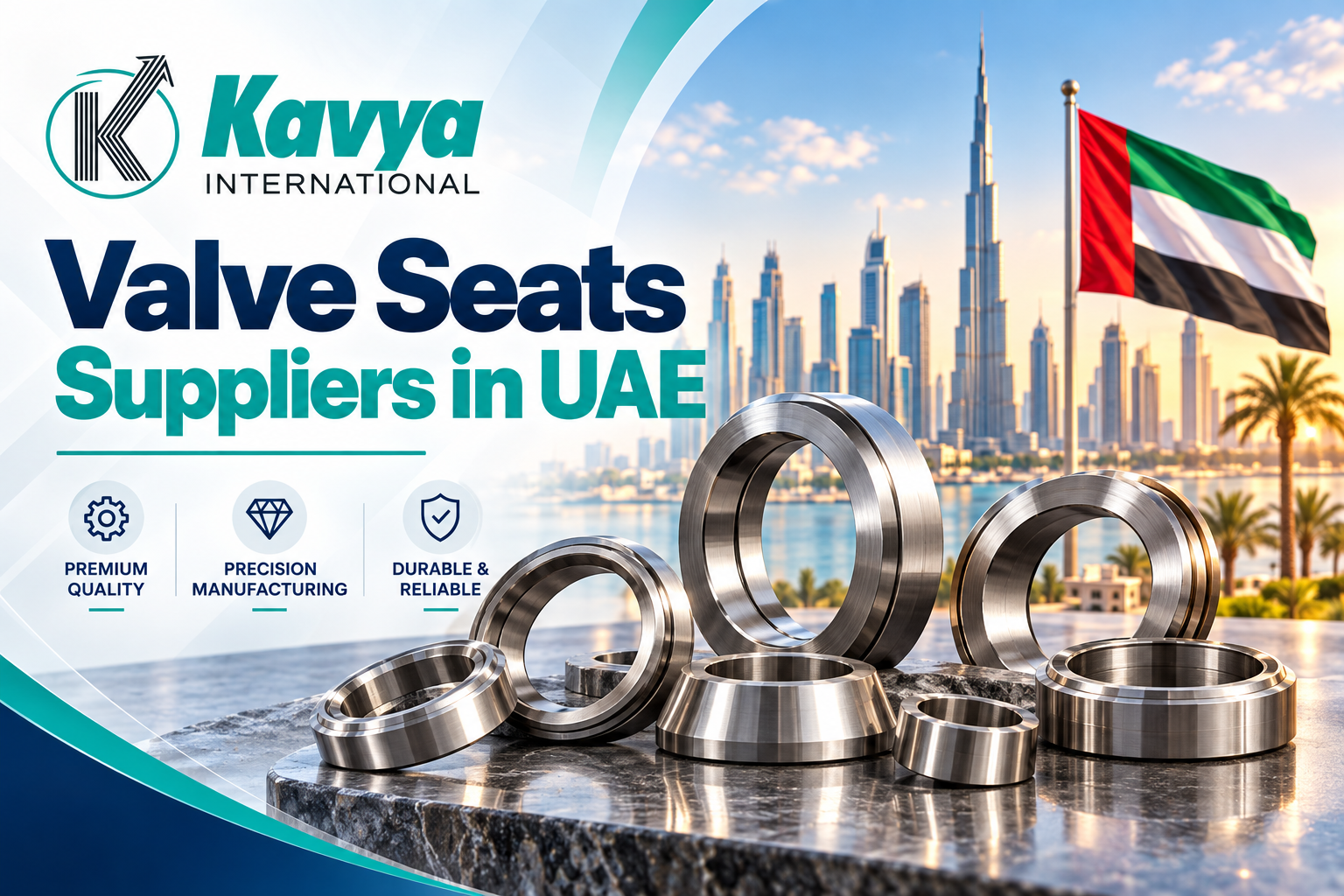
Looking for Valve Seats Suppliers in UAE? Send Kavya International your valve seat dimensions, drawing, sample reference, application and required quantity so the enquiry can be reviewed against the actual requirement.
Request a Custom QuoteFrequently Asked Questions
What is a valve seat and why is it important?
A valve seat is the contact surface or replaceable insert against which a valve closes. It helps sealing, heat transfer and repeatable valve operation. In engine applications, valve-seat condition has a direct effect on compression, combustion sealing and valve temperature control.
What information should I send when ordering valve seats in the UAE?
Share the OD, ID, height, seat profile or angle, application, material requirement, quantity and any drawing, sample or part reference available. If the seat is for an engine, also mention the engine model and whether it is an intake or exhaust position.
Which materials are used for valve seat inserts?
Material varies by duty. Depending on the design, valve seats may use alloyed cast iron, hardened ferrous materials, powder-metal or sintered grades, or other heat- and wear-resistant materials. The correct grade should be matched to temperature, valve material and operating conditions.
Can Kavya International support custom valve seat dimensions?
Custom enquiries can be reviewed when the required dimensions, tolerances, material details and application information are provided. A drawing or physical reference makes technical discussion much clearer.
How do I choose a valve seat for a high-temperature engine?
Do not select by size alone. Consider whether the seat is intake or exhaust, the expected valve temperature, engine load, cooling, fuel type, valve material and cylinder-head material. These factors influence the required wear and heat resistance.
What causes premature valve seat wear?
Common causes include incorrect material selection, poor interference fit, excessive temperature, loss of concentricity, incorrect contact width, worn valve guides, contaminated surfaces and incorrect installation machining.
What should be checked before installing a replacement valve seat?
Inspect the seat bore, guide condition, required interference, seat dimensions, valve face, concentricity and final installed height. The engine or equipment service specification should control the final machining and fit.
Does Kavya International supply valve seats to UAE buyers?
Kavya International can support UAE valve-seat enquiries based on required size, application, drawing, sample and material details. Availability, dimensions, material and delivery terms should be confirmed during quotation.
People Also Search For
Valve Seats Suppliers in UAE, valve seat supplier UAE, engine valve seats UAE, valve seat inserts UAE, replacement valve seats Dubai, exhaust valve seats, intake valve seats, diesel engine valve seat inserts, custom valve seats, cylinder head valve seats, Kavya International valve seats.
Conclusion
When comparing Valve Seats Suppliers in UAE, focus on the details that affect real fit and service life: material suitability, OD/ID/height, interference, valve contact geometry, concentricity and application. Kavya International can review valve seat requirements from drawings, samples and technical dimensions for buyers sourcing replacement or custom components. For a useful quotation, send the part details you actually have rather than only a generic product name.


