
VAST EXPERIENCE ACHIEVING SATISFACTION OF GLOBAL CUSTOMER

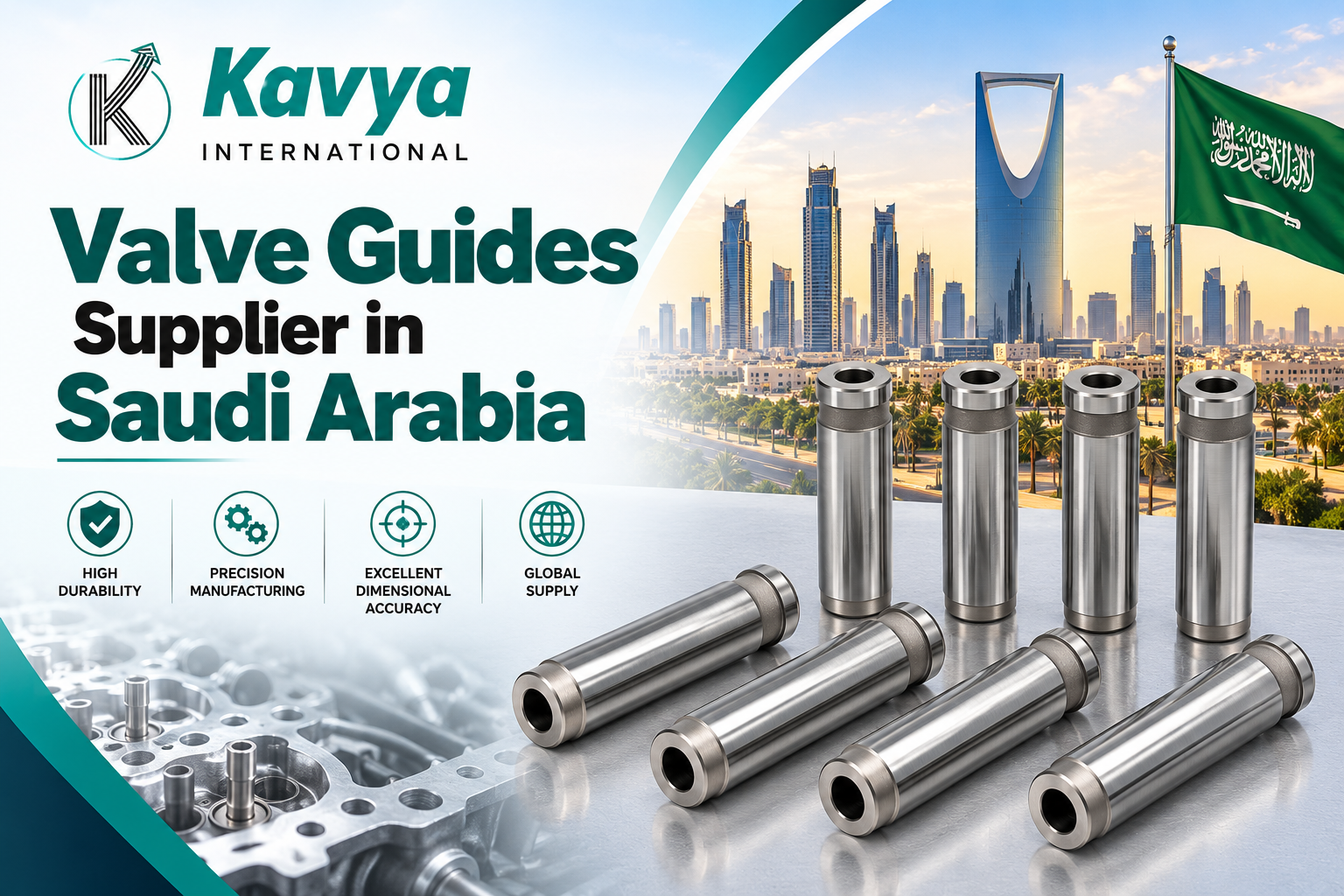
Valve Guides Supplier in Saudi Arabia
Table of Contents
- What Is an Engine Valve Guide?
- Valve Guide Materials and Selection
- Dimensions, Clearance and Specifications
- Buying Checklist for Engine Repairs
- Inspection, Packing and Saudi Import Details
- Where Valve Guides Are Used
- Common Valve Guide Buying Mistakes
- Working With Kavya International
- Conclusion
- Frequently Asked Questions
- What does a valve guide do?
- Are intake and exhaust valve guides identical?
- What measurements are needed to order a valve guide?
- Which materials are used for valve guides?
- How is valve stem clearance determined?
- Can a worn valve guide be replaced?
- What should Saudi buyers check for inspection and shipping?
- How do I request a quotation from Kavya International?
What Is an Engine Valve Guide?
A valve guide is a cylindrical insert in an engine cylinder head that supports and aligns the moving valve stem. It helps keep intake or exhaust valves travelling on the intended axis as they open and close. The guide-to-stem running clearance also affects oil control, heat transfer and wear.
For anyone searching for a Valve Guides Supplier in Saudi Arabia, the first step is to identify the engine and cylinder-head arrangement. Guides that look almost identical can differ in material, shoulder position, outside diameter or finished internal bore.
- Helps maintain valve-stem alignment through repeated engine cycles.
- Provides a controlled sliding surface between the guide bore and valve stem.
- Transfers some heat from the valve stem toward the cylinder head, depending on the design.
- Supports correct valve-sealing geometry when the cylinder head and seat are properly serviced.
Valve Guide Materials and Selection
Common valve guide material families include cast iron and selected copper-based alloys such as bronze. Specific grades and treatments depend on the original engine design, operating temperature, valve-stem material and lubrication conditions. A bronze guide is not automatically a better drop-in replacement for every cast-iron guide.
Which material is right for an engine rebuild?
Start with the engine manufacturer's specification or an approved engineering drawing. Check running clearance, thermal expansion, guide retention in the head and compatibility with the valve stem. Exhaust applications can experience particularly demanding thermal conditions, so avoid selecting a grade by appearance alone.
Where drawings reference material standards or alloy designations, quote the exact requirement. A general statement such as “bronze valve guide” does not identify a complete grade or manufacturing specification.
Dimensions, Clearance and Specifications
Important dimensions include guide outside diameter, overall length, collar or shoulder geometry and finished inside diameter. Also check insertion depth, any oil grooves, chamfers, and the specification for the bore after the guide has been installed in the cylinder head.
- Engine identification: make, model, engine code, cylinder-head reference and OEM part number if available.
- Guide size: outside diameter (OD), length, flange or shoulder dimensions and groove details.
- Valve stem: actual stem diameter and specified running clearance for intake and exhaust.
- Installed fit: cylinder-head bore, required interference and prescribed installation method.
- Finish: final inside-bore dimension, surface condition and any reaming or honing allowance.
- Order details: quantity, drawing revision, inspection requirements and delivery destination.
A detail that catches buyers out: a guide may have the correct free-state ID but change slightly once pressed into the head. If the repair procedure requires finishing the bore after installation, order accordingly rather than assuming the catalogue ID is the final working size.
Buying Checklist for Engine Repairs
What should be confirmed before placing an order?
Match the valve guide to the correct engine variant and position. Confirm whether the part is supplied finished to size or requires post-installation machining. Compare the specified material, dimensions, tolerances and quantity across quotations; a nominally similar guide is not necessarily interchangeable.
If you are supplying a sample from a used cylinder head, remember that worn bores and deformed guides can mislead measurement. Provide the engine reference and service specification wherever possible, rather than copying every dimension from a damaged part.
Inspection, Packing and Saudi Import Details
Typical dimensional checks include guide OD, length, shoulder features, bore size and visible burrs or damage. Material confirmation and hardness or other tests should be agreed only where relevant to the drawing. Ask whether inspection records are required before the order is finalized; do not assume they are included.
Finished guides should be packed to protect bore edges and machined surfaces from impact, contamination and corrosion during transit. For delivery to Saudi Arabia, confirm invoice descriptions, quantities, origin information, customs classification and any applicable clearance or conformity requirements with the importer or customs broker. The exact requirements depend on the shipment and product classification.
Where Valve Guides Are Used
Valve guides are used in suitable cylinder-head designs for passenger vehicles, commercial vehicles, diesel engines, generators, agricultural machinery and industrial engines. In Saudi Arabia, repair shops, engine rebuilders, spare-parts traders and maintenance teams may need replacements for a specific engine family.
Do not assume that the same guide suits a petrol engine, a heavy-duty diesel engine and a stationary generator. Differences in head design, temperature and valve geometry can matter more than the broad application label.
Common Valve Guide Buying Mistakes
Common errors include ordering only by outside diameter, mixing up intake and exhaust specifications, ignoring the cylinder-head bore, or overlooking the final stem-to-guide clearance. Another is requesting a “standard size” without checking whether the head has been repaired or machined previously.
Also avoid diagnosing every oil-consumption or valve-sealing problem as a guide issue. Worn valve stems, seals, valve seats and other cylinder-head conditions need checking as part of a proper repair assessment.
Working With Kavya International
Kavya International welcomes specification-based enquiries from buyers looking for engine valve guides for Saudi Arabian projects. Send the engine or OEM reference, drawing or sample measurements, material requirement, intake/exhaust application, quantities and city of delivery. Product suitability, availability, inspection and commercial terms should be confirmed against the specific enquiry.
A useful technical-team principle for this topic is: “Don't check only whether the guide fits the hole. Check the valve stem clearance after installation too; that is where a small mismatch can become an engine problem.” This is practical selection guidance, not a claim of a particular product test or completed project.
Need valve guides for an engine repair, overhaul or spare-parts order in Saudi Arabia? Share the engine reference, drawing, material, dimensions, quantity and delivery city with Kavya International so the requirement can be reviewed before quotation.
Request a QuoteFrequently Asked Questions
What does a valve guide do?
A valve guide supports and aligns the valve stem inside the cylinder head. Its running clearance allows movement while helping control wear, heat transfer and oil flow.
Are intake and exhaust valve guides identical?
Not always. Some engines use different guides or clearances for intake and exhaust valves because temperatures and operating conditions differ. Check the engine-specific part number.
What measurements are needed to order a valve guide?
Provide guide OD, length, shoulder details, bore requirement, valve-stem diameter and cylinder-head fit, along with the engine model or approved drawing.
Which materials are used for valve guides?
Cast iron and selected bronze or other copper-based alloys are commonly used. The correct material depends on the original design, thermal conditions and valve-stem compatibility.
How is valve stem clearance determined?
It is the difference between the finished guide bore diameter and valve-stem diameter. The permissible range must come from the engine manufacturer's service data or approved specification.
Can a worn valve guide be replaced?
Many cylinder-head designs allow guide replacement, but the procedure depends on the head construction and condition. The head bore, valve stem and seat alignment should be checked by a qualified engine machinist.
What should Saudi buyers check for inspection and shipping?
Agree on required dimensions, material identification, packing and inspection documents. Confirm invoice, origin, shipping terms and applicable Saudi customs or conformity obligations with the importer.
How do I request a quotation from Kavya International?
Send the engine or part number, drawing or measurements, required material, intake/exhaust use, quantity and Saudi delivery location. Technical suitability and availability are confirmed during enquiry review.
People Also Searched For
Engine valve guides Saudi Arabia, cylinder head valve guide supplier, diesel engine valve guides, bronze valve guides, cast iron valve guides, intake valve guide, exhaust valve guide, valve stem clearance, Kavya International.
Conclusion
When evaluating a Valve Guides Supplier in Saudi Arabia, look beyond the outside diameter and price. Correct guide material, head fit, installed bore and valve-stem running clearance all matter to a sound cylinder-head repair. For a requirement-specific discussion, send Kavya International the engine details and a drawing or part reference, and request a quotation based on the actual specification.


